
Why Storage Facility Security Matters (And What to Look For)
What actually separates a secure facility from one that just looks the part.
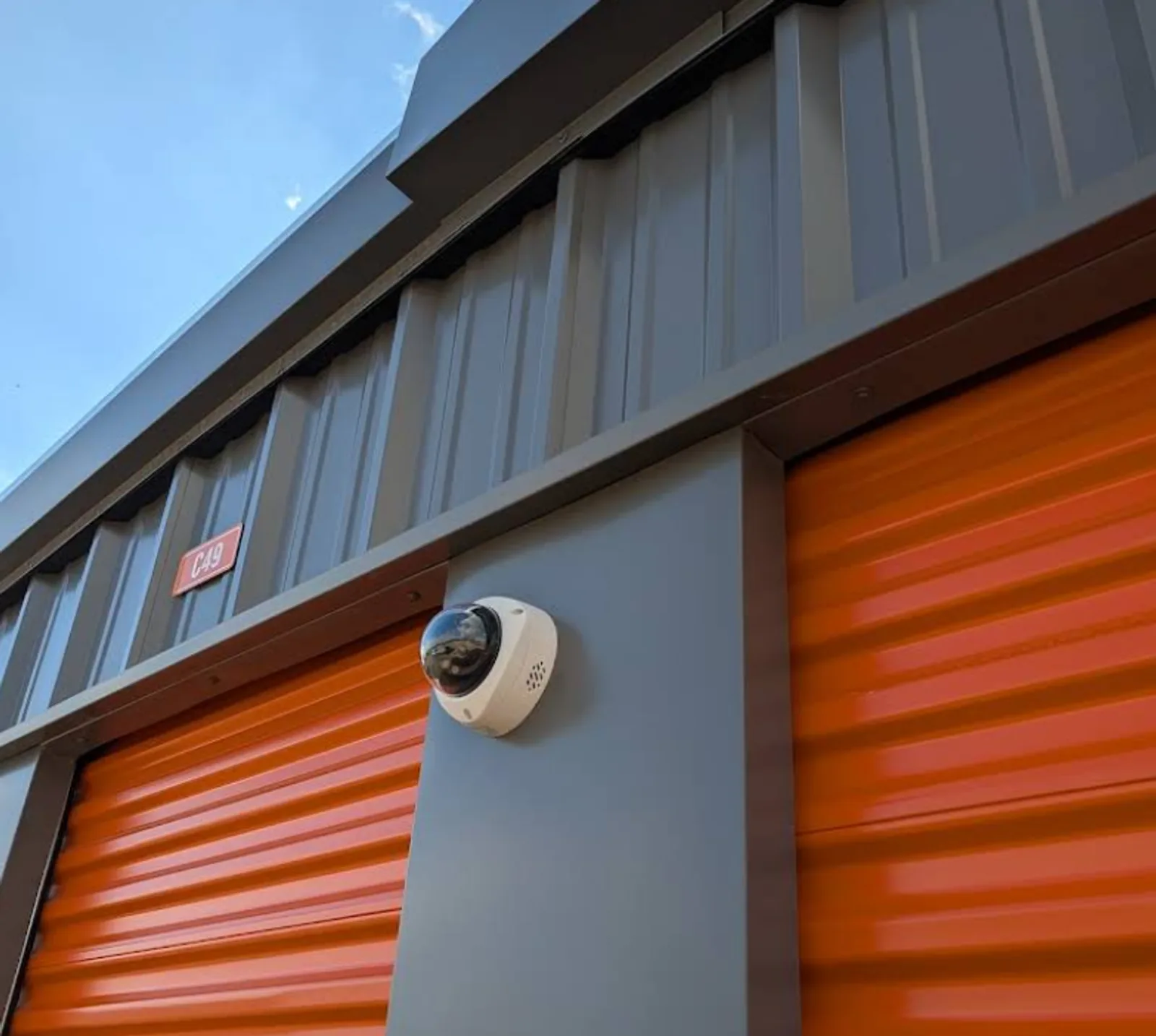
When most people go looking for a storage unit, they think about price and size. Security usually comes in third — if it comes up at all. That’s understandable. You’re busy, the monthly rate matters, and it’s easy to assume that any business with a lock on the door is reasonably secure. But not all storage facilities are built the same, and the difference between a well-secured facility and one that just has a padlock and a fence can matter a great deal when something goes wrong.
Security is one of the most overlooked factors in the storage decision — and it’s also one of the most consequential. Once you hand over the lease and move your belongings in, you’re trusting that facility to keep your stuff safe, often 24 hours a day for months or years at a stretch. That trust should be backed by something more than a sign on the gate. This post walks through what actually makes a storage facility secure, how our camera system at Labette County Storage works, and what questions you should ask any facility before you sign.
What Actually Makes a Storage Facility Secure?
Security at a self storage facility isn’t one single thing — it’s a combination of overlapping layers that work together. A facility that has one or two of these elements but is missing others has real gaps. Here’s what a well-secured facility should have:
Cameras. This is the most visible and arguably most important layer. High-quality cameras positioned at entrances, driveways, unit rows, and key access points create a comprehensive record of activity at the facility. Not just any cameras, though — resolution matters, night performance matters, and coverage angle matters. A low-resolution camera with poor night vision is better than nothing, but not by much. Modern professional camera systems capture usable footage in complete darkness and store it for weeks at a time.
Lighting. Cameras without adequate lighting are much less effective, especially after hours. A well-lit facility discourages opportunistic activity and ensures that camera footage is actually usable if something happens. Lighting should cover driveways, unit rows, and entry and exit points — not just the office building.
Fencing, access control, and physical barriers. Perimeter security is the physical layer — what prevents unauthorized vehicles or individuals from simply walking onto the property. At Labette County Storage, our fenced and gated facility means access is controlled at the entry point, and the gate itself becomes a natural checkpoint for everyone entering the property. Drive-up visibility also plays a role here: a facility laid out so units are easy to see from the main drive is inherently more secure than one with hidden corners and blocked sightlines.
Unit locks. The lock on your individual unit is your last line of defense. Disc locks and cylinder locks are significantly harder to cut or pick than standard padlocks. Many quality facilities include a free lock with every rental specifically because the type of lock matters. If a facility lets you use any old lock without guidance, that’s a small but telling sign.
At Labette County Storage, all four of these layers are in place. Cameras cover all entry points and unit rows. Grounds are well-lit. Our fenced and gated perimeter ensures that vehicle and foot traffic is controlled and visible. And every unit comes with a free disc lock. The details are on our security page if you want the full picture.
How Our Camera System Works
We invested in a professional-grade Reolink camera system because we believe that if you’re going to have cameras, they should actually work — day and night, in every season, without gaps in coverage or footage that’s too blurry to be useful.
Here’s what that looks like in practice. Our cameras use ReoNeura AI detection, which means the system isn’t just recording video 24 hours a day — it’s actively distinguishing between people, vehicles, and background movement. That reduces false alarms and ensures that actual events are flagged for review. The cameras shoot at 4K/16MP resolution, which means individual details — license plates, faces, clothing — are clearly visible in the footage rather than smeared into an unreadable blur.
Low-light performance is a major factor in any real security setup, and ours handles it with ColorX color night vision. Standard night vision produces grainy black-and-white footage that’s often useless for identifying specifics. ColorX maintains color detail even in near-darkness, which makes a meaningful difference when footage needs to be reviewed. All cameras are housed in vandal-resistant enclosures, so they can’t be disabled by simply bumping or hitting them. They’re also rated for operation from −22°F to 131°F — which matters here in Labette County, where summers are genuinely hot and winter nights can drop well below freezing.
All footage is centralized through an NVR (network video recorder) system, meaning every camera feeds into a single recording system that stores continuous footage. There’s no gap where one camera records and another doesn’t. If something happens at our facility on US-59, there’s a continuous record of what occurred, when, and where.
You can read more about the specifics on our security page, but the short version is: this isn’t a single dusty camera bolted over the office door. It’s a purpose-built system that treats security as a real priority.
What happens if a camera catches something? If an incident occurs — a break-in attempt, suspicious activity, vandalism, or anything else — the footage is available for review and can be provided to law enforcement as needed. We take incidents seriously, and having reliable footage makes the response faster and more effective. Tenants who report concerns are taken seriously, and we work with local law enforcement when situations call for it.
Lighting and Visibility
It’s easy to underestimate how much lighting contributes to a facility’s security posture. Most people think of cameras when they think of security — but lighting is what makes cameras work at night, and it’s also one of the most effective deterrents against opportunistic activity.
A dark storage facility after hours is an invitation for problems. Poorly lit unit rows mean that someone moving around the property at 11 p.m. is largely invisible, both to cameras and to anyone passing by. A well-lit facility is the opposite — activity is visible, cameras capture usable footage, and anyone who doesn’t belong there is much more likely to simply move on.
At Labette County Storage, we keep the grounds well-lit throughout the facility — not just near the entrance, but along unit rows and access areas. If you access your unit after dark, you’re not fumbling around in shadows trying to find your lock. And if anyone else is on the property after hours, they’re visible.
Is 24/7 access safe? Yes, when the facility is properly designed for it. Round-the-clock access is convenient, but it only makes sense if the security infrastructure supports it. Lighting that covers the full property, cameras that perform in low light, a gated perimeter, and clear sightlines from the main drive all make after-hours access safe rather than risky. A facility that offers 24/7 access without adequate lighting or camera coverage is trading security for convenience in a way that doesn’t serve tenants well.
Access Control and Physical Barriers
Physical security starts at the perimeter. Labette County Storage is a fenced and gated facility, which means the first layer of access control happens before anyone gets near the unit rows. The gate creates a natural checkpoint — it limits who can drive onto the property in the first place, and it pairs with our camera system to document every entry and exit.
Drive-up visibility is another underrated aspect of physical security. When unit rows are laid out so they’re visible from the main drive and from inside the gated area, it’s much harder for someone to work undetected in an out-of-the-way corner. Our layout puts unit rows in clear view, which reinforces the gate and camera coverage with simple open visibility.
The combination of a perimeter fence, gated entry, camera coverage, and open site layout means that there’s no easy hiding spot. That matters both for deterrence and for response — if something does happen, the record of who entered and when is clear.
Do I still need tenant protection if the facility has cameras and a gate? Yes — and this is worth understanding clearly. Security cameras and a gated perimeter are deterrents and tools for response and investigation, but they don’t prevent every possible loss. Severe weather, fire, and other events aren’t stopped by a gate or a camera. Even a well-secured facility can experience incidents. Tenant protection covers the financial loss to your belongings if something does happen, regardless of cause. Security infrastructure and tenant protection address different risks and work best together. Learn more on our tenant protection page.
What to Ask Any Storage Facility Before You Rent
Not every facility is going to volunteer its security details upfront. Here are the questions worth asking before you sign anything:
- What camera system do you use, and what resolution do the cameras record at? A facility that can’t answer this question specifically probably doesn’t have great cameras. Vague answers like “we have cameras everywhere” without specifics on resolution or coverage are a yellow flag.
- How is footage stored, and for how long? Footage that’s stored locally on a single device and overwrites after 24 hours is much less useful than centralized NVR recording that retains footage for two weeks or more. Ask specifically.
- Is the facility fenced and gated? A perimeter fence with a controlled gate adds a meaningful layer of physical security. Ask whether access through the gate is monitored and documented.
- What lighting is on the property after dark? If a facility only lights the office and entrance, the unit rows may be in the dark. Ask whether the entire property is lit and whether you can visit after dark to see for yourself.
- What type of lock is on my unit, and does a free lock come with the rental? A facility that includes a quality disc or cylinder lock with the rental is signaling that they care about the last line of defense, not just the perimeter.
- Is there a tenant protection plan available? Security and protection coverage work together. A facility that doesn’t offer any tenant protection — or that discourages it — isn’t giving you the full picture of how to keep your belongings covered.
At Labette County Storage, we’re happy to answer all of these questions directly. We want you to feel confident about what you’re trusting us with before you ever load the first box.
Why It Matters in Parsons
Security matters everywhere, but it has some specific dimensions here in Parsons and southeast Kansas that are worth thinking about. The most obvious one is weather. We’re in tornado alley, and Labette County gets its share of severe storms between April and August. Hail, straight-line winds, and the occasional tornado are part of life here. Anyone who’s been through a spring storm in Parsons knows how quickly conditions can turn and how much damage a serious weather event can do.
The physical security infrastructure at Labette County Storage is built to handle Kansas weather conditions. Our cameras are rated from −22°F to 131°F, which covers the full range of Labette County weather — from cold January nights to the kind of August heat that settles over southeast Kansas and doesn’t let go. Vandal-resistant camera housings hold up to hail and wind-driven debris. The fenced perimeter and facility construction are designed for the Midwest climate.
Beyond weather, Parsons is a community where people look out for one another, but that doesn’t mean security concerns don’t exist. Storage facilities in any market can be targets for opportunistic theft or vandalism. A comprehensive camera system, good lighting, and a fenced and gated perimeter are the right answer regardless of where you are. Whether you’re coming out from downtown Parsons or from somewhere farther out in Labette County, knowing your storage facility is properly secured gives you one less thing to think about.
We’re a veteran-owned business operated by Midwest Storage Solutions LLC. Security isn’t a selling point to us — it’s a responsibility. The people storing things at our facility on US-59 are our neighbors, and we take that seriously.
The Bottom Line
Security is worth thinking about before you rent, not after something goes wrong. The right facility has overlapping layers — professional cameras with real night vision capability, adequate lighting across the full property, a fenced and gated perimeter that controls access, and quality locks on every unit. That’s what Labette County Storage is built on, and it’s what we’re happy to show you in person.
If you want the details on our camera system and security setup, visit our security page. If you want to understand how tenant protection works alongside facility security to protect your belongings financially, visit our tenant protection page. Or give us a call at (620) 778-8196 — we’re available Monday through Saturday 9am–6pm and Sunday Noon–4pm. We’d rather you ask questions upfront than regret a decision later.
More from the Blog
What Is Tenant Protection and Do You Need It?
Your homeowner’s insurance might not cover items in storage. Here’s what tenant protection actually covers.
Tips for Storing Items Long-Term
Learn how to properly pack, protect, and organize your unit so everything stays in great shape.
How to Choose the Right Storage Unit Size
From small closets to large garage-sized units, here’s how to pick the perfect fit.